Drainage
Oil separators
ACO Class I light-oil separators to EN 858 for fuel stations, workshops, car washes, car parks and depots, in polyethylene and GRP.
Rain on a forecourt picks up diesel, petrol and engine oil, and carries it to the storm drain. An oil separator to EN 858 lets the water go and keeps the oil.
- Compact: Coalisator-P, NS 1.5 and 3, free standing or below ground.
- Below ground: Oleopator-P and Oleopass-P (with bypass), NS 3 – 10.
- In a plant room: Oleopator P free standing, and Oleolift P with built-in pumps.
- Large yards and depots: Oleopator G and G-H in GRP, with or without bypass.
Every Class I separator here uses a coalescence insert. A sludge trap goes ahead of it.
Oil separators in the catalogue

ACO Coalisator-P, free standing
Model NS 1.5, NS 3 · EN 858
Compact Class I light-oil separator in polyethylene with a coalescence insert and automatic float closure, for free-standing installation.
ACO Coalisator-P, below ground
Model NS 1.5, NS 3 · EN 858, DIN 1999-100
Compact Class I light-oil separator for below ground, with a height-adjustable top and B 125 cast iron cover, to EN 858.
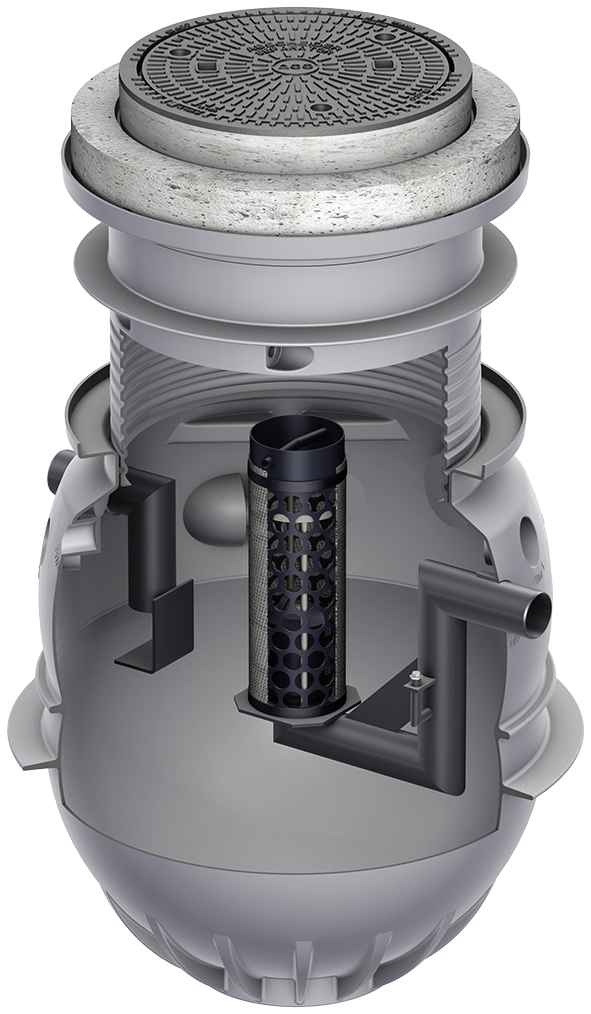
ACO Oleopator-P
Model NS 3 – NS 10 · EN 858, DIN 1999-100
Below-ground light-oil separator in polyethylene, NS 3 to NS 10, to EN 858, for fuel stations, workshops and car parks.
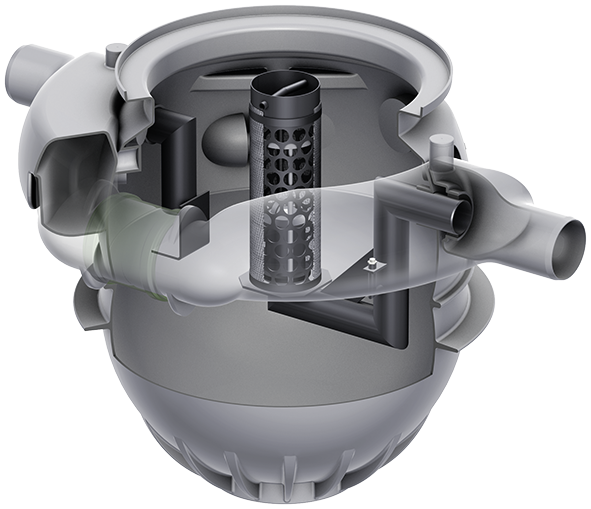
ACO Oleopass-P
Model NS 3 – NS 10 · EN 858, DIN 1999-100
Below-ground light-oil separator in polyethylene with an integrated bypass, NS 3 to NS 10, to EN 858.
ACO Oleopator P, free standing
Model NS 3 – NS 30 · DIN EN 858, Class I
Free-standing Class I light-oil separator in welded polyethylene, round, oval or segment, NS 3 to NS 30, for frost-free rooms.
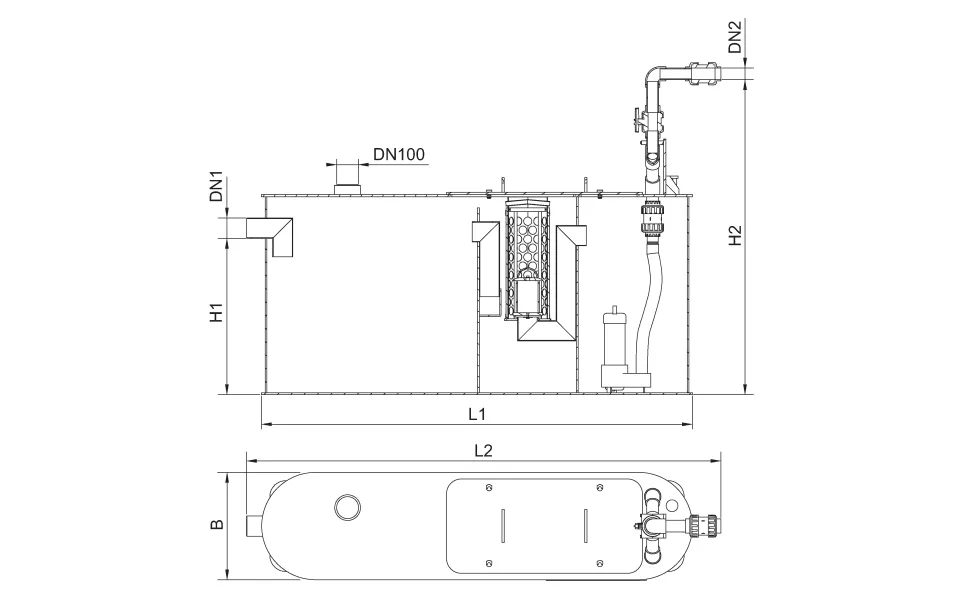
ACO Oleolift P
Model NS 1.5 – NS 10 · DIN EN 858, Class I
Free-standing Class I oil separator with built-in submersible pumps, for basements below the sewer, NS 1.5 to NS 10.
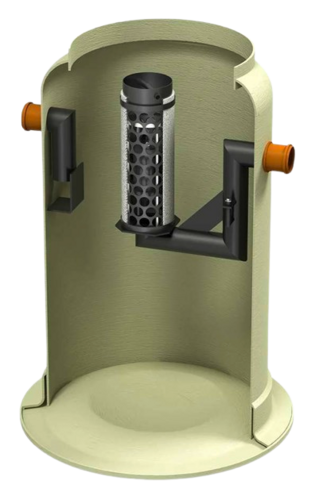
ACO Oleopator G
EN 858, Class I
Vertical GRP light-oil separator, Class I to EN 858, with a coalescence insert. Light to handle on site.
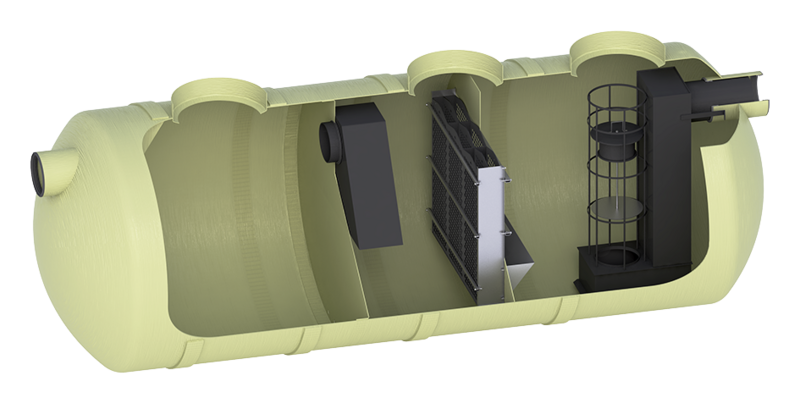
ACO Oleopator G-H
EN 858, Class I
Horizontal GRP light-oil separator, Class I to EN 858, with a coalescence insert. Light to handle on site.
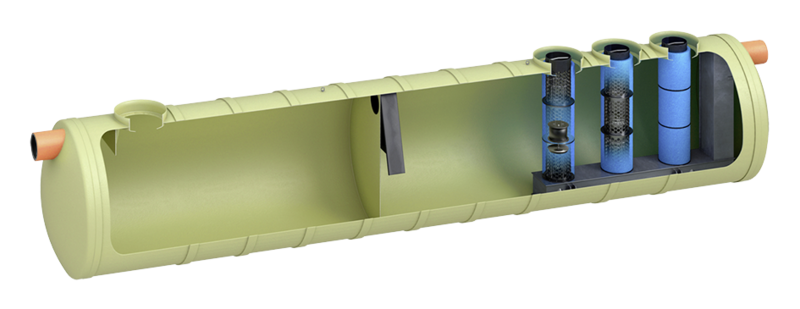
ACO Oleopator G-H NS100+
Model NS 100+ · EN 858, Class I
Horizontal GRP light-oil separator, Class I to EN 858, with a coalescence insert. Light to handle on site.
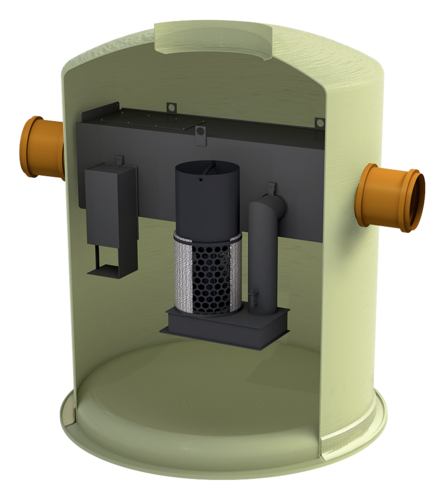
ACO light liquid separator with bypass G
EN 858, Class I
Vertical GRP light-oil separator, Class I to EN 858, with a coalescence insert and integrated bypass. Light to handle on site.
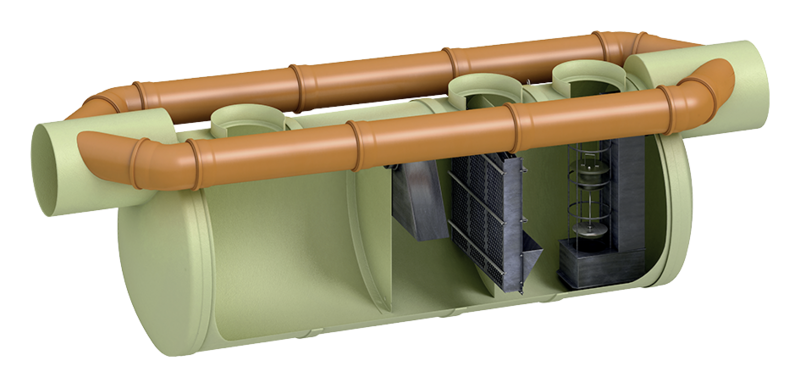
ACO light liquid separator with bypass G-H
EN 858, Class I
Horizontal GRP light-oil separator, Class I to EN 858, with a coalescence insert and integrated bypass. Light to handle on site.
Oil separators: questions
What is an oil water separator?
A tank that lets oil-contaminated water stand long enough for the oil to rise and be held back, so only water goes to the drain. Class I separators to EN 858 use a coalescence insert to catch fine droplets.
Where is an oil separator required?
Wherever runoff can carry fuel or oil: petrol stations, workshops, car washes, bus and truck depots, car parks and generator areas. Check the requirement with your pollution control board consent.
What is the difference between Class I and Class II oil separators?
Under EN 858, a Class I separator leaves no more than 5 mg/l of oil in the outflow, using a coalescence insert. Class II allows up to 100 mg/l. The ACO separators listed here are Class I.
A size or rating not listed?
Our procurement desk sources it, from Valvetech or anywhere in the world.