Drainage
Channel drains
Polymer concrete, polypropylene and slot channel drains from ACO, load class A 15 to F 900, for yards, roads, car parks and homes.
A channel drain is judged on the worst day of the monsoon and the heaviest wheel that crosses it. ACO makes one for each.
Choosing by load class (EN 1433)
- A 15: areas used only by pedestrians and cyclists.
- B 125: footpaths, pedestrian areas and car parks for cars.
- C 250: kerbside areas and road shoulders.
- D 400: carriageways of roads and parking for all vehicles.
- E 600 and F 900: heavy wheel loads, such as docks, container yards and airports.
Multiline covers most sites from A 15 to E 600. Monoblock and Qmax Neo go to F 900. Euroline and Brickslot suit homes, entrances and stone paving, and KerbDrain puts the drain inside the kerb.
Channel drains in the catalogue


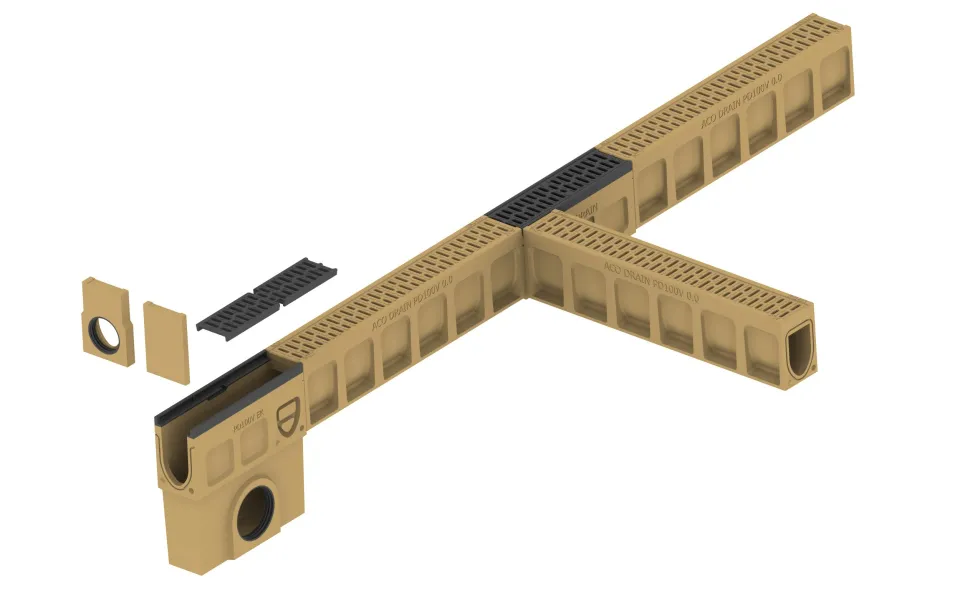
ACO Multiline
Model V 100 – 500 · DIN EN 1433
Polymer concrete channel drain with a V-profile, for footpaths up to heavy yards. One channel body takes every width and edge rail, load class A 15 to E 600.
ACO Monoblock
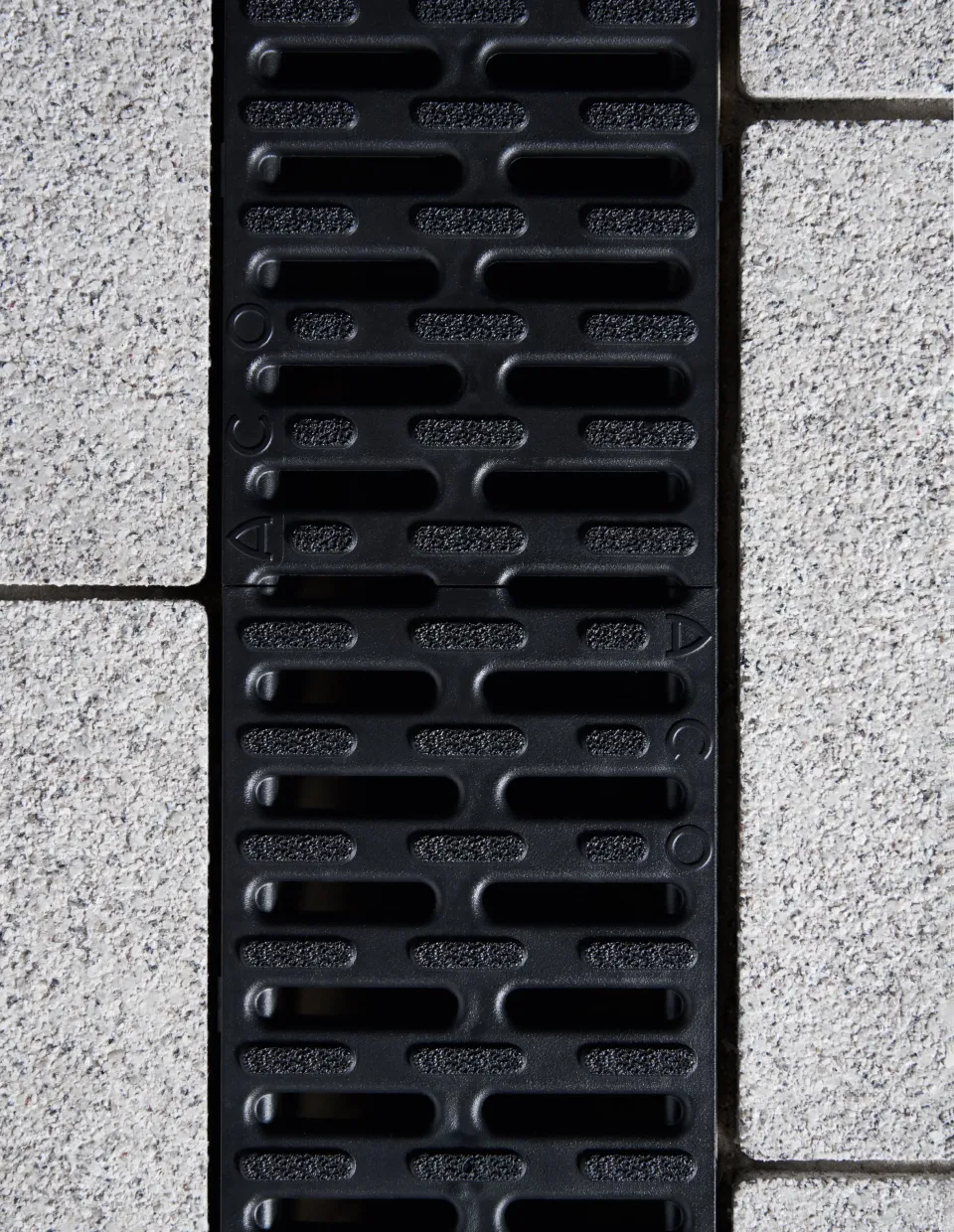
UNI EN 1433
Monolithic polymer concrete drainage channel with no loose grating, for motorways, logistics yards and airports. Load class up to F 900.
ACO Self® Euroline
EN 1433
Slim polymer concrete channel drain for homes, courtyards, entrances and building perimeters, with screwless grate locking.
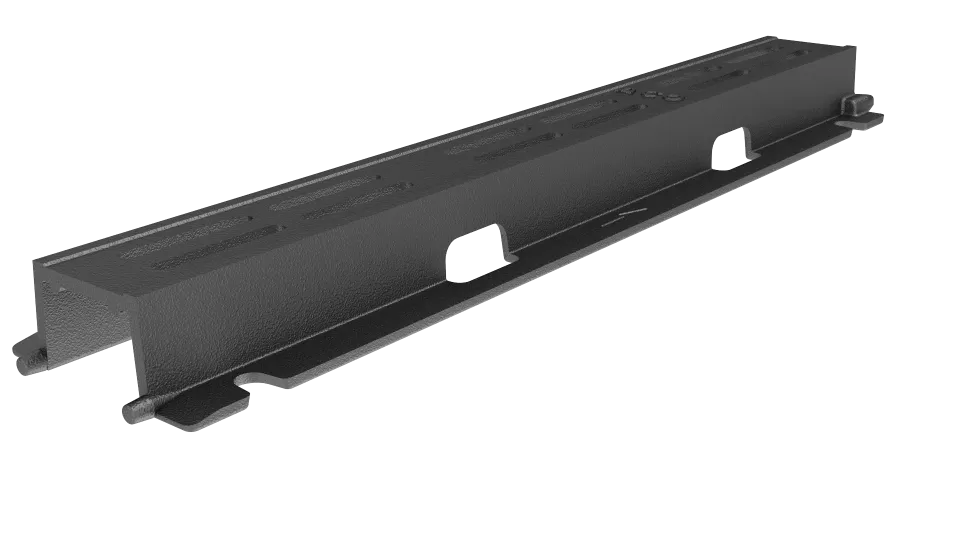
ACO Qmax Neo
Model Neo 300, Neo 600
Polypropylene slot drain with ductile iron edge rails and large retention volume, for load classes A 15 to F 900. Nominal sizes ø 300 and ø 600 mm.
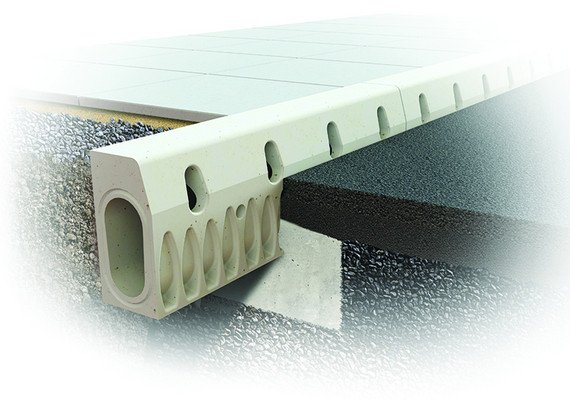
ACO KerbDrain™
Model Kapacity 480, Kompact 305 · DIN 19580
One-piece resin concrete kerb and drainage unit for roads, roundabouts, car parks and petrol stations. Load Class D to DIN 19580.
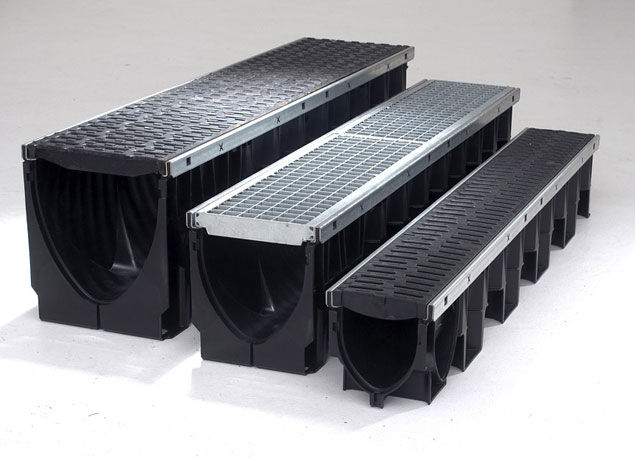
ACO MultiDrain PPD
Model PPD
Recycled polypropylene channel drain for car parks, landscaping, homes and commercial sites. Not for public road carriageways or motorways.

ACO Brickslot & Light Point
Stainless steel slotted frame on ACO polymer channels: a discreet slot between pavers for façades, thresholds, retail and landscaping.
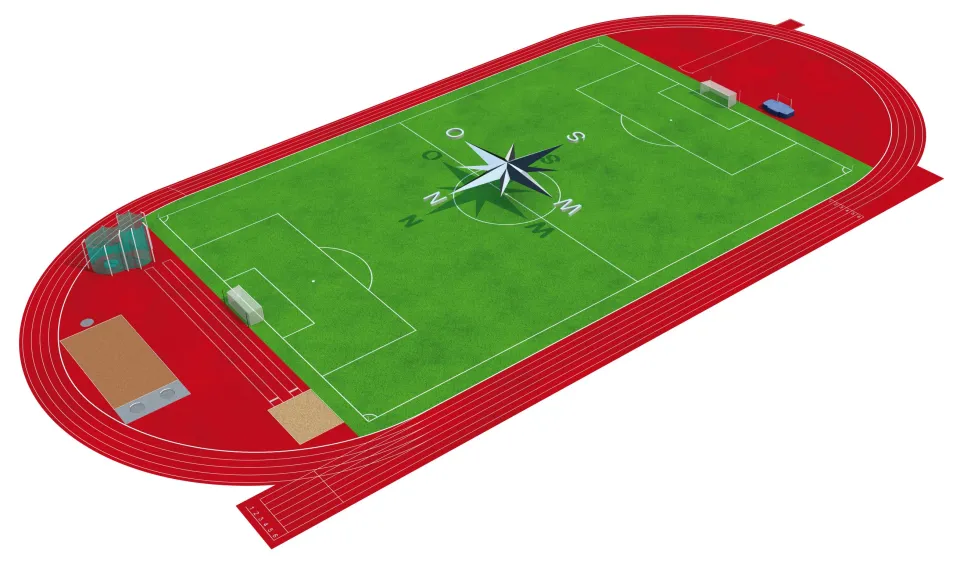
ACO Sport
Channel drainage and accessories for running tracks, stadiums and sports grounds: track drains, rubber-capped kerbs, sand traps and service boxes.
Channel drains: questions
What is load class EN 1433?
EN 1433 is the European standard for drainage channels in vehicle and pedestrian areas. It sets six load classes, from A 15 for pedestrian areas to F 900 for very heavy wheel loads such as airports and docks. The number is the test load in kilonewtons.
Which load class do I need for a driveway or car park?
B 125 suits footpaths and car parks used by cars. Where lorries or all vehicle types drive and park, choose D 400. Docks, container yards and airport aprons need E 600 or F 900.
Is a trench drain the same as a channel drain?
Yes. Trench drain, channel drain, line drain and storm water drain channel are names for the same thing: a channel with a grating that drains a surface along a line.
Why choose polymer concrete over a cast-in-situ concrete drain?
Polymer concrete channels are made to size in the factory, have a smooth surface that sheds silt, are light to lay, and resist chemicals and frost. A cast-in-situ drain depends on the site's formwork and finish.
A size or rating not listed?
Our procurement desk sources it, from Valvetech or anywhere in the world.